


Executive Coaching Blog
Latest News and Articles

Burnout Blindspots: When High Performers (and their managers) Mistake Busy for Productive
What’s particularly tricky about high performers is that they often don’t see the warning signs - especially in themselves. They’re used to pushing through, used to being the go-to, used to being “fine.” They conflate endurance with excellence. So when the long hours start taking a toll, it can be hard for them to recognize the difference between being focused and being depleted.

Karen Wright
6 Jul 2025

AI Coaching, Beyond the Algorithm: Why Human Insight is still Relevant in Executive Coaching
At the highest levels of leadership, coaching isn’t about performance metrics - it’s about meaning, identity, and impact. These are human concerns. And that’s why, no matter how advanced the tools become, the best coaching will always be led by someone who can sit across from another person - and truly see them.
Karen Wright
4 Jul 2025

The Hidden Cost of Nice: When Empathetic Leaders Avoid Tough Conversations
A leader who avoids a difficult conversation might rationalize it as protecting the other person’s feelings. But it’s almost always about protecting their own. Discomfort, guilt, fear of conflict, or worry about being disliked - these are all real emotions. But avoiding those emotions doesn’t eliminate the issue. It only defers it.
Karen Wright
2 Jun 2025
Beyond Burnout: How Executives Can BOTH Sustain High Performance AND Well-Being
At the executive level, performance isn’t just about output. In fact, it’s not at all about output! It’s about clarity, resilience, presence, and energy. Judgment. Thoughtfulness. Nuance. All of which require mental and emotional depth and acuity. When those are gone, no amount of scheduling magic will bring them back.
Karen Wright
2 Jun 2025

The ROI of Executive Coaching: What CEOs and HR Leaders Need to Measure
The ROI of coaching isn’t just a number - it’s a stronger culture, better leaders, and smarter decisions. But when done well, it’s a number too. And one that makes a compelling case for continued investment.
Karen Wright
24 May 2025

When Smart Isn’t Enough: Coaching High Performers Who Hit a Wall
Coaching works with high performers not because it gives them answers - but because it creates the space for honest self-reflection, tough conversations, and intentional rewiring. It challenges the myth that competence equals completeness.
Karen Wright
23 May 2025

From Executive Presence to Executive Essence: Leading with Authenticity in a Polished World
The leaders who have the most impact - the ones who stay, who elevate their teams, who make things happen, whose decisions are trusted and who are sought out by others at all levels - aren’t just performing leadership or giving the appearance of leadership. They are leaders, from the inside out. They are not “doing” leadership, they are “being” a leader.
Karen Wright
22 May 2025

Should you Share Personal Goals at Work?
Ideally we all have goals and interests outside of our work. And we often share those goals and interests with our coworkers casually, in the course of normal conversations. But share with the boss? Sometimes that feels risky - I mean, what if they think having outside interests means we're less committed than we "should" be? What if the opposite were true?

Karen Wright
28 Apr 2025

The Books we Recommend Most Often (a short list)
Time is short and attention is fragmented - so in order for us to suggest (and sometimes STRONGLY suggest) that an executive leader read a book that book has to have the potential to make a profound impact on the way that leader thinks, leads and lives.
Karen Wright
25 Apr 2025

How Executive Coaching Can Help Leaders Who Have Trouble Delegating
Longer term, a leader who is seen as being able to build capacity and capability is seen as a leader who is an asset to the business, and therefore more likely to be able to handle higher level and more complex responsibilities. Delegating skills are critical to career advancement.
Karen Wright
7 Oct 2024

Executive Coaching vs. Traditional Leadership Training: The Difference, and When to Use Each Form of Development Support
By understanding the strengths and appropriate uses of each type of leadership development resource, organizations can ensure they provide the right kind of support to their leaders at the right time, leading to more effective and resilient leadership throughout the organization.
Karen Wright
15 Sep 2024

The Top 10 Leadership Challenges Solved by Executive Coaching
Coaches work with leaders to identify areas for improvement, set long-term objectives, and create action plans for continuous growth. This ongoing support ensures that leaders remain adaptable, resilient, and effective in their roles over time.
Karen Wright
10 Sep 2024

The Impact of Executive Coaching on Leadership Development
As more organizations recognize the importance of investing in their leaders' development, executive coaching will continue to play a pivotal role in shaping the future of leadership.
Karen Wright
2 Sep 2024

How can you tell if you're too far down "in the weeds?"
Leadership is hard. Frequently uncomfortable. The high level thinking you're supposed to be doing doesn't show tangible results any time soon, so how can you feel useful and productive? And you've always been rewarded for being the person who "gets results" - how can you (and anyone else) measure your value if you're not "doing things?"
Karen Wright
25 Jan 2024
Unleashing the Power of Technical Leadership with Parachute Executive Coaching
Technical leadership, therefore, is not simply about leading with knowledge - it’s about translating that knowledge into results through people. It’s a dual responsibility: maintaining technical excellence while growing leadership capacity.
Karen Wright
8 Dec 2023

Leadership Team Development
Leadership Team development is a unique practice area, one that requires not only advanced level coaching skills but also the ability to see the system that is a team while recognizing the individuals within it.
Karen Wright
8 Dec 2023

Coaching for Leaders
Leader coaching challenges can be as simple as honing presentation and communication skills, and as complex as managing change and dealing with ambiguity – some of which can be taught but most of which are better developed through the iterative process of coaching.
Karen Wright
7 Dec 2023
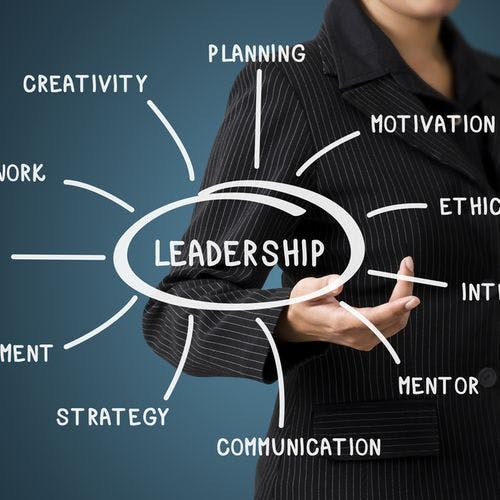
Women in Leadership
Rightly or wrongly, women often face different challenges on their leadership journey. Whether they are the only woman at the executive table or are trying to accelerate through a traditional organization, most women will tell you that they find it difficult to find mentors, understand expectations, build networks and focus their development.
Karen Wright
7 Dec 2023

How - and why - to stop people-pleasing at work.
"... I challenge anyone with people leadership responsibility to take a look in the mirror at what real capacity you have to offer your role, and then summon up the courage to calibrate your own efforts as a role model to those seeking an example of what it takes to be successful."
Karen Wright
28 Feb 2023

How do you encourage innovation?
As a leader, I think it’s essential that you encourage “science projects” – chances your team can take where the goal is learning, and where it’s safe to find out when things don’t work.
Karen Wright
13 Apr 2022

How to be a Great Leader
"...I’m also clear that no one is a great leader UNLESS and UNTIL they are happy as a human. What it takes to be happy is a topic of much debate, but for me it is rooted in being kind, being curious and being conscious of our impact on and role in our larger communities."
Karen Wright
22 Mar 2022

Can you be yourself at work?
"...working in an organization means you have a relationship with that entity. Which means you have a personal responsibility to set and communicate your boundaries, ask for what you need and pay attention to the impact your behaviours and choices have on others. And, in my view, the organization has a responsibility to listen to you, to communicate its expectations, and to create an environment where humans can truly thrive in order to support its ultimate success."
Karen Wright
4 Jan 2022

From Technical Leader to People Leader (Part 2): The Promotion Problem
"If we are self-aware, we can choose careers that allow us to work in alignment with our most accessible strengths. But career management is only partly making good choices. It’s also advocating for oneself in alignment with those choices – a skill set in and of itself."
Karen Wright
28 Nov 2021

From Technical Leader to People Leader (Part 1): The Founder Problem
"Bootstrapping is necessary in the early days of a venture, but not the expense of strong leadership. Founders – take a look in the mirror and assess whether people leadership is really in your skill set. Build a COO into the business plan, or support yourself with an executive coach."
Karen Wright
17 Nov 2021

Why you need an Executive Career Coach
"At the senior levels of an organization there are few, if any, people with whom you can talk transparently about your career goals. Your peers are, or see themselves as, your competition internally. Your boss has a vested interest in your career following a particular trajectory, and your direct reports either fear the change a new boss would bring or have their own eye on your current role. No one is objective, and few if any represent a “safe” space for a career conversation. Enter the objective third party in the form of an executive coach."
Karen Wright
2 Nov 2021

Successful Executive Onboarding
"Rather than thinking of a new executive as having to either “sink or swim,” consider how the organization can provide buoyancy support and even wind in the sails as the new leader joins the team. Onboarding programs can take many forms, and for new executives to co-create their onboarding programs with key influencers in the welcoming company will increase the probability of long term success."
Karen Wright
4 Oct 2021

What is a CEO Coach? The Ultimate Guide
"Coaching at the executive leadership level rarely takes the form of a “coaching program.” Executive coaching is a relationship, and as such doesn’t have a predictable curriculum or structured framework as is the case with coaching programs. When coaching leaders we set goals and areas of focus and then adapt each session’s approach to the needs and interests of the executive in that moment."
Karen Wright
7 Sep 2021

What do do when your Work has lost its Meaning
"“Meaning” can be found in lots of places, and is much more accessible – and reasonable – than “purpose.” In fact, you can ascribe any meaning you like to anything and everything. We actually do it all the time. So why not make choices about what means what that increases your chances of being happy?"
Karen Wright
30 Jun 2021

Should I give Feedback?
"When you’re feeling uncomfortable about delivering feedback, check in with your intention. If you are really trying to help the person do more of what works and less of what doesn’t, your authenticity will probably overshadow any awkwardness you’re feeling. And speak from your own experience – how the person’s behaviours, actions and choices have landed for you – rather than attempting to represent the experiences of others."
Karen Wright
30 Jun 2021

What is Executive Coaching? A Comprehensive Guide
Unlock the power of executive coaching services for your organization. Dive into our all-encompassing guide and revolutionize your team's journey.
Karen Wright
12 May 2020